Feasibility Testing of a Glass Microsphere-Based Lactase Immobilization System for Domestic Use
Guochen Dong, Yuanzhao Pan
Introduction
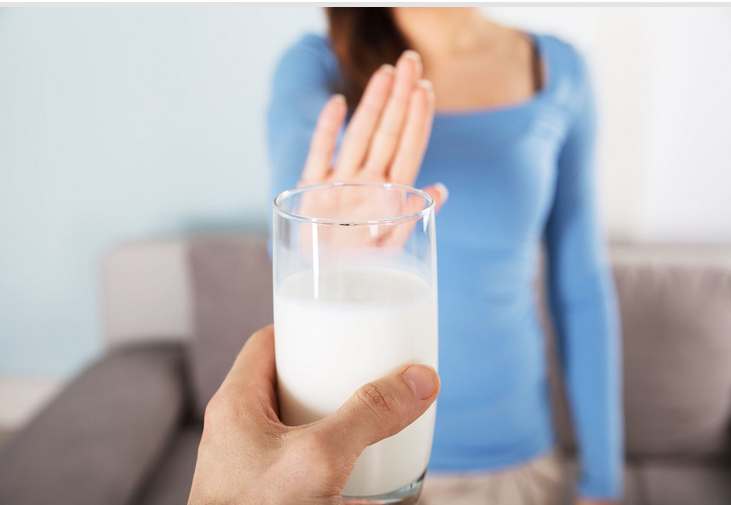
Lactose intolerance is a syndrome that describes people who have several symptoms when they uptake products that have lactose, a kind of disaccharide that can be broken into one molecule of glucose and one molecule of galactose. This is normally done by a kind of enzyme called lactase. Many people, however, have defficient lactase, which means that they can’t normally break down lactose when they intake diary products, especially milk.(Malik and Panuganti, 2023) Having milk can lead to a wide range of symptoms including some common ones like nausea and diarrhea(Chevalier told me). This may pose a big threat to human nutrition because milk plays a crucial part in a healthy diet by providing proteins, and Lactose introlerance is prevalent in Asia.(Vandenplas 2015) According to worldpopulationreview.com, in 2024 there are about 85% of Chinese people who suffer from lactose intolerance.
Recently there are already commercial applications of using lactase for lactose intolerant people, such as directly producing lactose-free milk or providing lactase drops for civil use. In industrial production of lactose-free milk, both mobilized and immobolized lactase are commonly used. Immobilized lactase in lactose-free milk production, specifically, along with the whole field of immobilized enzymes, has recently gained significant focus, not only because of its application on industrial manufacture, but also has potential in bioengineering and other fields.(Shukla and Wierzbicki, 1975)
In immobilizing lactase, there are many possible supporting materials, such as porous glass, alginate, and cellulose. (Yılmaz-Karaoğlu et al., 2022) There are many researches that have focused on determining the effects of types of materials to the activity of lactase. According to researches, lactase immobilized in glass microspheres has high enzyme activity, and can be effective after dozens of rounds. (Ko et al., 2018)
Aim
The experiment aims to design a home-based device to remove lactose from commercially sold milk products. We decided to make a product that includes a container and immobilized lactase for civil use. In our first ideas, the product can be used by pouring milk inside and wait for the lactose to be hydrolyzed. Its effectiveness may also persists after tens of such procedures. Because of the high enzyme activity on glass supports, we decided to use glass microspheres as our lactase supporting platform for our product.
Product and Experiment design
Based on the description in the essay, we will need to conform to the following procedures to immobilize lactase.
- Preparation of Glass Microspheres:
20 cm³ (30 g) of glass microspheres were cleaned with concentrated nitric acid for 48 hours.
After several washes in double-distilled water, the microspheres were immersed for 3 hours at 60°C in a 10% (v/v) 3-aminopropyltriethoxysilane (APTS) aqueous solution (15 mL) to modify the surface for enzyme immobilization. The pH of the silane solution was adjusted to pH 4 using 6 N HCl.
The glass microspheres were then washed with double-distilled water and dried overnight in an oven at 80°C.
- Activation of Carriers:
Each carrier, including the prepared glass microspheres, was treated with 20 mL of 2.5% glutaraldehyde aqueous solution for 60 minutes at room temperature.
- Washing:
The carriers were washed with double-distilled water to remove any residual glutaraldehyde.
- Incubation with Lactase:
The activated carriers were incubated for 16 hours at 4°C with 1 mg of lactase dissolved in 10 mL of 0.1 M phosphate buffer (pH 6.0, adjusted with sodium hydroxide and sodium carbonate).
- Removal of Unbound Lactase:
Any unbound lactase was removed by washing the carriers with 0.1 M phosphate buffer.
- Storage:
The lactase-linked carriers were stored at 4°C until use. (Ko, Chih-Yuan, et al, 2018)
Next, we will integrate a heating system and an agitator to form the prototype of our final product. For our experiment, we will only need a constant heating platform and a stirring stick to simulate the process.
First, we will need to test whether the immobilize lactase is feasible to digest lactose. Since it only required us to determine whether lactose is digested and do not require us to do quantitative analysis, considering the tight budget as a high school student, we decided to use Benedict’s test, which is much cheaper than assay kits, to determine the feasibility of the approach. In order to exclude the interference of lactose, we have done a small pre-experiment. We have configured 4.5% lactose solution, 9% glucose solution (due to the lack of galactose, we just use glucose to substitute galactose, since they are both reducing sugar), 2.25% lactose and 4.5% glucose solution (simulate half of the lactose is digested), and pure water. Through Benedict’s test, the result shows that there is an observable difference between each solution. This is because, when lactose is digested by lactase, it will hydrolysis into glucose and lactose, so the concentration of sugar will be the twice of its original. Based on the result, we decided to use Benedict’s test for our initial proof of feasibility.
Second, we will conduct experiments to find the optimal temperature for the process. Using the constant heating plate, we will set several experimental groups with same amount of milk, lactase, and reaction time, but different temperatures. The control groups will be at the room temperature, and data will be recorded. The final evaluation of lactose residual will measure by the Glucose GOD/POD assay kit. The glucose GOD-POD assay utilizes glucose oxidase (GOD) to catalyze the oxidation of glucose to gluconolactone and hydrogen peroxide, which, in the presence of peroxidase (POD), reacts with a chromogenic substrate to produce a colorimetric change proportional to the glucose concentration. This method is highly specific to glucose due to the enzyme’s specificity, allowing for accurate quantification even in complex matrices like milk. The sensitivity of the GOD-POD assay enables the detection of low glucose concentrations, making it suitable for analyzing lactose-hydrolyzed milk products where glucose levels are indicative of the extent of lactose hydrolysis. The accuracy of this method has been validated against standard analytical techniques, such as high-performance liquid chromatography (HPLC), demonstrating its reliability for quantitative glucose analysis in dairy products. (Ambade Vivek, et al, 1998) The difference of concentration of glucose can represent the extent of lactose digestion, since only the breakdown of lactose can increase the concentration of glucose.
Third, after finding out the approximate optimal temperature. We will conduct another experiment which will use focus on testing the reaction time for the prototype. Obtaining sample of different time point through one reaction, we will use same assay to derive data.
In the final stage, we will focus on analyzing the data collected from our experimental trials to determine the optimal conditions for lactose digestion. It will be carried out using graphing software. The graph and data will reveal us the final optimal operation condition for the process and the efficiency of our products, with the ultimate goal of establishing the most effective parameters for lactose digestion in our home-based lactose removal device.
Given our status as high school students with limited budgets, our approach to this research project is designed to be as cost-effective as possible. We intend to make full use of the laboratory resources available at our school, thereby minimizing external expenses. Additionally, we will create a detailed budget plan to account for necessary materials such as milk samples. In sourcing these materials, we will seek out affordable options that do not compromise the integrity of our experiments. This careful financial planning and resource management will ensure that our project remains viable, enabling us to develop a practical solution for lactose intolerance that can be implemented within the confines of a home kitchen. This focus on creating a home edition lactase exclusion machine underscores our commitment to making lactose digestion technology accessible and affordable for everyday use.
Innovation and Impact
We have searched about lactases for civil use and found that they are mostly in dropping liquid form. This can be widely applicable and quite effective, but using immobilized lactase device can have better performance in effectivity, reusability, larger working range and possibly lower prices. Our design may provide an exploration of innovation in such civil used devices. If it can be proven of relatively high efficiency, low negative effects to milk, and relatively low prices, it may have possible commercial use in daily application, especially may serve as a public device in schools for students who are lactose intolerance.
Reference List
AMBADE, VIVEK N, et al. “METHODS for ESTIMATION of BLOOD GLUCOSE : A COMPARATIVE EVALUATION.” Medical Journal Armed Forces India, vol. 54, no. 2, Apr. 1998, pp. 131–133, https://doi.org/10.1016/s0377-1237(17)30502-6.
Horner, T. W., et al. “β-Galactosidase Activity of Commercial Lactase Samples in Raw and Pasteurized Milk at Refrigerated Temperatures.” Journal of Dairy Science, vol. 94, no. 7, 1 July 2011, pp. 3242–3249, www.sciencedirect.com/science/article/pii/S002203021100316X#bib0090, https://doi.org/10.3168/jds.2010-3742.
Ko, Chih-Yuan, et al. “Lactose-Free Milk Preparation by Immobilized Lactase in Glass Microsphere Bed Reactor.” Food Biophysics, vol. 13, no. 4, 11 July 2018, pp. 353–361, https://doi.org/10.1007/s11483-018-9541-8. Accessed 5 June 2022.
Shukla, Triveni Piasad, and Leopold E. Wierzbicki. “Beta‐Galactosidase Technology: A Solution to the Lactose Problem.” C R c Critical Reviews in Food Technology, vol. 5, no. 3, Jan. 1975, pp. 325–356, https://doi.org/10.1080/10408397509527178.
Vandenplas Y. (2015). Lactose intolerance. Asia Pacific journal of clinical nutrition, 24 Suppl 1, S9–S13. https://doi.org/10.6133/apjcn.2015.24.s1.02
Birch, G G, et al. Enzymes and Food Processing. London: Applied Science, 1981.
World Population Review. “Lactose Intolerance by Country 2020.” Worldpopulationreview.com, 2021, worldpopulationreview.com/country-rankings/lactose-intolerance-by-country.
Malik, T. F., & Panuganti, K. K. (2023). Lactose Intolerance. In StatPearls. StatPearls Publishing.
Yılmaz-Karaoğlu, Sümeyye, et al. “Lactose Hydrolyzing Activity of the Lactase Immobilized Polycaprolactone and Silk Fibroin-Based Nanofiber and Nitrocellulose Membrane.” Food Bioscience, vol. 49, Oct. 2022, p. 101828, https://doi.org/10.1016/j.fbio.2022.101828. Accessed 30 Jan. 2023.