Development of Two New Efficient Means of Wastewater Treatment

Summary
Wastewater accumulation is a daunting issue. This global concern stimulates scientists to search for more effective ways of treating wastewater and preserving natural resources. In this study, we have augmented current treatment efficiencies and general effectiveness by creating two new methods. Using hollow fiber membrane (HFM) based liquid-liquid extraction technology in water treatment, we have demonstrated that this technique is more efficient than the current available methods at extracting organic components into the organic phase inside the HFM. Meanwhile, we have used polymeric resins to absorb both neutral and charged organic components in wastewater. Both newly developed methods have the potential to be industrialized for combating the human-caused wastewater contamination issue with increased vigor and efficiency.

Gilbert W. Bao, Albert M. Bao, Xiaojing Liu and Youxin Li

Click here for PDF file: February2014
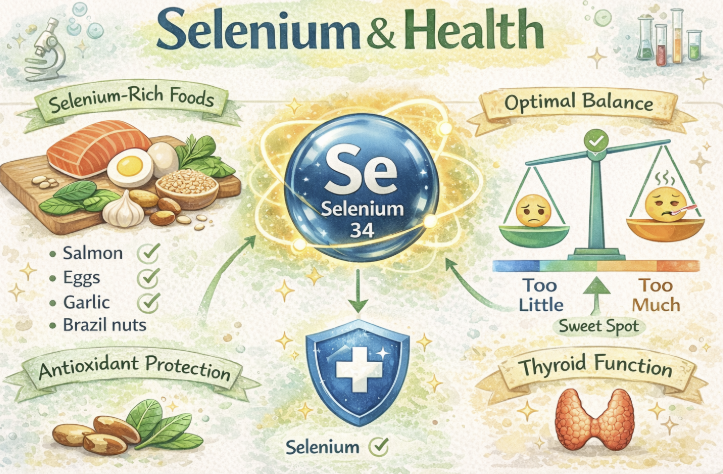
Selenium’s Gift to Hometown Health​

Selenium’s Gift to Hometown Health​

QIZHE WEN

My hometown Enshi in Hubei holds the globe’s only verified independent selenium deposit—local rocks have up to 66.66mg/kg of this mineral, 11 times higher than comparable formations.

A nationwide survey shows 53% of Chinese students have myopia, but Enshi’s juvenile rate is far lower. Selenium shields lens proteins from oxidation, boosts ocular microcirculation, and slows eye axis growth. Enshi’s cancer incidence is merely 0.00468%, well below the national average.

“This is a blessing from selenium-rich earth,” my mother says proudly.​


我的家乡在湖北省恩施土家族苗族自治州,拥有全球唯一探明的独立硒矿床。家乡的岩石硒含量最高达66.66mg/kg,是同类岩石的 11 倍。

恩施州的调研数据显示:全国中小学生近视率高达53%,恩施州的中小学近视率远低于这个数字。因为硒能保护晶状体蛋白质不被氧化,还能改善眼部微循环,减缓眼轴增长。家乡癌症发病率仅4.68/10万,远低于全国平均水平。

妈妈说这是“硒土养出来的福气”。

Apache Hive-Based Big Data Analysis of HealthCare

The Electronic Health Record (EHR) stores valuable information on
patient records in digital form. The amount of data in the EHR is increasing
due to government mandates and technological innovation. Patient data
are recorded using sensors and medical reports. Given huge amounts of
heterogeneous data in the EHR, there is a need for effective methods to
store and analyze these data for meaningful interpretations. This study
focuses on various analysis techniques for analyzing and retrieving
required information from big data in the EHR. Many Hive queries are
conducted in the Hadoop distributed file system to extract valuable
information. The study also proposes and demonstrates the use of Tableau
as a data analysis technique for effectively deducing valuable information
in the form of visual graphs.

Zhenlin Kan, Xinru Cheng, Seung Hyun Kim,Yuting Jin

Pancreatic Adenocarcinoma: An Analysis of Drug Therapy Options through Interaction Maps and Graph Theory

Summary
Pancreatic cancer is the fourth leading cause of cancer-related deaths in humans (ASCO 2012). Pancreatic cancer cells exhibit a different gene expression profile from normal cells, with approximately 122 over-expressed proteins. A novel method was created to find the most important areas for future drug development based on influential disease-causing proteins in pancreatic cancer that currently lack drug treatments.

Anvita Gupta, Sejal Aggarwal, Sangeeta Agrawal

Click here for PDF file: February2014(1)

Attitudes toward the emission trading system

Abstract

Recent years have witnessed rapid and vigorous industrial advances, and as a result, emissions of various pollutants, particularly carbon dioxide, have increased sharply and threaten the environment at the global level in a phenomenon widely referred to as global warming. To mitigate global warming, international agencies have considered the concept of the “carbon trading system” or the “emission trading system” (ETS) and attempted to apply it to various countries. Many E.U. countries currently participate, and a few countries in Asia have been willing to consider the idea. However, powerful countries such as the U.S. and China have not fully embracing this scheme. This study examines the differences between the U.S., a developed country, and Korea, a developing country, in their attitudes toward the most important aspect of the ETS as well as their choice. The results based on a sample of 60 students (30 Korean students and 30 U.S. students) indicate that the respondents generally perceived a need for the ETS. Korean students were more likely to perceive a need for the ETS. The respondents generally had favorable attitudes toward the ETS, and Korean students were more likely to have favorable attitudes toward the ETS. The respondents generally emphasized low economic pressure as the most important factor influencing ETS success. These results have important implications for international agencies and policymakers wishing to identify practical methods for mitigating the issue of global warming.

B.Yoo