Biomedical Technology Advances: Rewriting the Future of Medicine

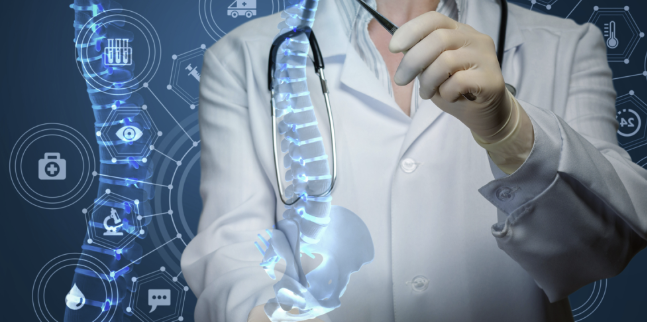
Biomedical technology is moving at a pace that would have felt like pure fantasy just a few decades ago. Things that once lived only in the pages of science fiction—artificial organs, gene editing, and robotic surgery—are now stepping into the light of everyday healthcare. These breakthroughs aren’t just about giving doctors better tools; they are fundamentally shifting our relationship with our own bodies. We are moving away from a world where we simply manage the symptoms of a disease and toward an era where we can detect, personalize, and even correct illness before it takes hold.

The most personal shift is the rise of precision medicine. For a long time, healthcare followed a “one-size-fits-all” model where every patient with the same diagnosis received the same treatment. Biomedical technology is finally breaking that mold. By using genetic testing and deep data analysis, doctors can now look at a person’s unique biological signature. In cancer care, for instance, this means physicians can target the specific mutations of a tumor with surgical precision. This approach doesn’t just improve the chances of recovery; it saves patients from the grueling side effects of treatments that their bodies never truly needed.

We are also witnessing a revolution at the very source of life: our genes. With technologies like CRISPR, we are no longer limited to just treating the symptoms of inherited disorders. Instead, researchers are finding ways to reach in and “edit” the faulty genes that cause illness at the root. For families living with conditions like sickle cell disease or muscular disorders, this represents a massive shift from a lifetime of management to a genuine hope for a cure. While we still have important ethical questions to answer, the path forward is moving toward correction rather than just control.

This new level of care is even following us home. Biomedical engineering has put powerful health monitors into our smartwatches and wearable sensors, tracking our hearts and oxygen levels in real time. This isn’t just about data; it’s about peace of mind. For someone with a chronic condition, these tools act like a silent guardian, catching warning signs long before they become an emergency and reducing the need for constant hospital visits. It gives individuals the power to be active participants in their own health, rather than just passive recipients of care.

Inside the hospital, the change is just as profound. Robotic-assisted surgery is allowing surgeons to perform delicate procedures with a level of precision that the human hand alone cannot match. These systems mean smaller incisions, less pain, and much faster recovery times, allowing people to get back to their lives and their families sooner. Meanwhile, the frontier of regenerative medicine is exploring how to use stem cells and 3D bioprinting to grow replacement tissues or even repair damaged organs. We are standing on the edge of a future where the shortage of donor organs could become a thing of the past, and the science of medicine becomes as resilient and hopeful as the people it serves.

MINGHAO WANG

AI + Transportation

AI + Transportation

Traffic pollution contributes to a large part of environment pollution, such as air pollution (greenhouse gas and road dust emission) and noise pollution. In urban aeras, traffic is one of the major sources of air pollution, which significantly affects our life. However, with the unprecedented development of artificial intelligence (AI), transportation is revolutionized, pollution can also be reduced. Signal control, navigation, and autonomous vehicle (AV) are several fields in transportation that are most related to our life and have already been cooperated with AI.
Traditional signal control uses fixed signal plan, which means that the duration and offsets of lights will be constant. Although fixed timing plan is stable and works for the most scenarios, it fails in some scenarios like congestion because it cannot change based on various traffic states. However, as AI can be involved, real-time signal control is possible. Real-time signal control changes light duration and offsets based on current traffic state and thus can be adaptive and flexible to resolve congestion. Google in 2021 launched a project that uses AI in signal control to make traffic lights more efficient. Apart from AI controlled signal that reduces congestion, AI also helps to navigate drivers (ie. Google map navigation) and then reduce congestion in one region. When detecting high traffic volume or density in one region, AI can propose different routine plan for nearby drivers such that traffic flow can be divided and balanced to prevent congestion. Faster traffic flow and less congestion reduces fuel usage and air pollution.
With the deployment of intelligent signal and navigation, the development of AVs can be accelerated. Since AV is controlled by computer, it accelerates and brakes smoother, which makes fuel uses more efficient and reduces energy consumption. Ideally, after all vehicles become AVs, vehicles together with signal and navigation can be fully controlled by AI, efficiency will be optimized, and congestion will be minimized.
With all the benefits of AI being said, the application is still challenging. Unlike classifying an image where making mistake is tolerable, any mistake in real-world application may be fatal, such as turning on the wrong signal light or failing to recognize a pedestrian in AV. Therefore, computer scientists and traffic engineers are still seeking better AI tools to accomplish cleaner and faster traffic.

CHENHAO ZHANG