
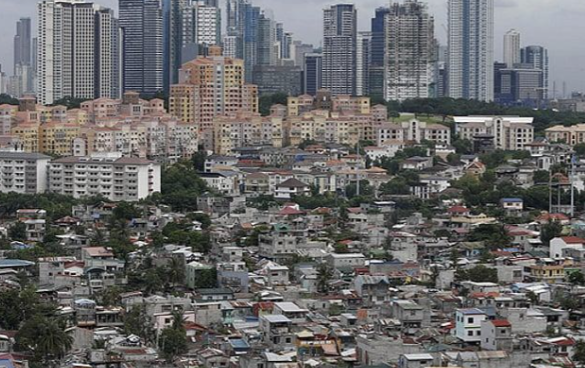
Why Economic Growth Doesn’t Always Reduce Inequality in the Philippines
The Philippines has experienced considerable economic growth over the past two decades. New shopping malls, industrial parks, office buildings, and residential developments have changed many cities. Foreign companies have established manufacturing facilities, while industries such as tourism, information technology, and business process outsourcing have created employment opportunities. In 2025, the Philippines reached upper-middle-income country status according to the World Bank.
However, economic growth does not necessarily mean that everyone benefits equally. Some families have gained access to better-paying jobs and improved living conditions, while others continue to struggle with low incomes and limited opportunities. This raises an important question in development economics: What determines whether economic growth actually improves people’s lives?
One example is Clark Freeport Zone in Pampanga. Clark has become an important center for manufacturing, aviation, logistics, tourism, and business services. By the end of 2025, more than 1,280 registered companies operated within the Freeport, employing over 150,000 workers. This expansion has created opportunities for local residents and attracted workers from neighboring communities.
Yet having jobs available nearby does not guarantee that everyone can obtain them. Many positions require technical qualifications, computer skills, English proficiency, or previous work experience. Students from well-funded schools may have better access to these resources than students attending schools with limited facilities. Even two applicants with similar abilities may face different employment prospects because of their educational backgrounds.
This illustrates the importance of human capital in economic development. Human capital refers to people’s knowledge, skills, education, and health, which influence their productivity and earning potential. When economic growth creates demand for skilled workers, people who already possess those skills are more likely to benefit. Those without access to appropriate education or training may remain excluded from better employment opportunities.
The Philippines has made progress in expanding access to education, but educational quality remains a serious concern. According to a 2026 World Bank report, approximately 91 percent of Filipino children at age ten cannot read and understand an age-appropriate text. This does not mean that these children are incapable of learning. Rather, it suggests that many are not receiving the educational support necessary to develop basic skills.
Improving education is therefore not simply a social responsibility. It is also an economic investment. If more young people develop strong literacy, numeracy, and technical skills, they can participate more effectively in industries that require trained workers. Vocational programs and partnerships between schools and employers could help students prepare for actual labor-market demands.
Infrastructure presents another challenge. Businesses depend on reliable electricity, transportation, internet connections, and public services. When electricity prices are high or power supply is unreliable, companies face additional operating expenses. Large businesses may be able to purchase generators or install backup systems. Small enterprises often have fewer resources to manage these costs.
For example, a small grocery store experiencing a prolonged power interruption might lose refrigerated products, while a workshop could lose several hours of production. These losses represent more than temporary inconvenience. They reduce earnings and make it more difficult for small businesses to expand, hire workers, or invest in better equipment.
Infrastructure also affects employment opportunities indirectly. A person living far from an industrial park may spend a significant portion of their wages on transportation. Even when a job offers higher pay, commuting expenses and travel time can reduce its actual benefits. Consequently, infrastructure development should consider not only where businesses operate but also whether surrounding communities can reach them affordably.
The distinction between economic growth and economic development becomes clearer when examining poverty statistics. According to the Philippine Statistics Authority, the percentage of Filipinos living below the official poverty threshold declined to 9.7 percent in 2025, compared with 15.5 percent in 2023. This represents meaningful progress. Nevertheless, approximately 11 million Filipinos remained below the poverty threshold in 2025.
These figures show that economic growth and poverty reduction can occur together without eliminating inequality. Development should therefore be measured through several indicators, including income, educational achievement, employment quality, healthcare, and access to essential services.
The government can address these challenges by improving public education, expanding vocational training, investing in affordable electricity and transportation, and supporting small businesses. However, policies should also consider differences between communities. A training program designed for an urban industrial center may not address the needs of an agricultural municipality where employment opportunities are very different.
Private companies also have responsibilities and incentives to contribute. Businesses can cooperate with local schools, offer apprenticeships, and provide entry-level training for applicants who lack previous experience. Such programs could help companies meet their labor needs while allowing more people to participate in economic expansion.
Ultimately, the Philippines does not face a simple choice between achieving economic growth and reducing inequality. Both objectives can support each other. Better education creates a more productive workforce, improved infrastructure lowers business costs, and broader employment opportunities increase household purchasing power.
The more difficult question is how to ensure that people have the resources necessary to participate in a growing economy.
A country can build new factories, attract international investors, and increase its national income. But if large numbers of people lack the education, transportation, or financial resources to benefit from these developments, economic progress will remain uneven.
Economic development should therefore be judged not only by how much an economy produces, but also by how many people gain meaningful opportunities to improve their lives.
CHAEUN MOON